SureFire ICAR: Delta's New 6mm ARC Rifle

Photo via @specialopsmag on X.
Every few years a rifle shows up in grainy photos before it shows up in a catalog. Right now, that rifle is the SureFire ICAR, the Intermediate Combat Assault Rifle: a purpose-built 6mm ARC carbine that surfaced in preproduction form in early 2025 and then, if the reporting is accurate, went straight to work in one of the most consequential special operations in decades. Here's everything we know, with the confirmed facts separated from the well-sourced rumors.
SureFire ICAR at a glance
- Caliber: 6mm ARC
- Lower / magwell: LWRCI Six8 pattern, not standard AR-15
- Magazine: Magpul PMAG 25 ICAR GEN M3, 25 rounds, purpose-built for the cartridge
- Controls: fully ambidextrous
- Handguard: integrated RRS dovetail for direct tripod mounting
- Barrel: Proof Research PXT rifling (reported, not officially confirmed)
- Suppressor: SureFire SOCOM6-MINI4, the company's dedicated 6mm ARC can
- Operating system: Optimized Bolt Carrier philosophy carried over from the SureFire AROC (reported)
- Status: preproduction. No announced release date and no announced price. SureFire has confirmed commercial sales are planned.
Barrel length and unloaded weight have not been published. Anyone quoting you a number is guessing.
What is the SureFire ICAR?
The ICAR is SureFire's ground-up answer to a question the AR-15 was never designed to answer: how do you run a longer-range, higher-BC intermediate cartridge through a carbine without giving up the size, weight, and handling that make an M4-pattern rifle worth carrying? Rather than force 6mm ARC through a standard AR-15 magwell (which works, but with compromises), SureFire redesigned the platform around the cartridge. The result was built for a government customer and remains in preproduction with no announced launch date, but SureFire has confirmed commercial sales are planned.
Known features from the preproduction rifles include fully ambidextrous controls, OBC style BCG, and a beefed up bolt designed for 6mm Arc.
The Venezuela connection
On January 3, 2026, U.S. forces captured Venezuelan president Nicolás Maduro in a raid executed by Delta Force with CIA intelligence support. That part is documented history. What puts the ICAR in the story: images and posts circulating shortly after, including from retired Delta operator Larry Vickers, reported that assaulters carried the new SureFire ICAR in 6mm ARC on the operation. Additional imagery analysis accounts identified suppressed ICARs in operators' hands. None of this has been officially confirmed, since units like that don't do press releases about their rifles, but the sourcing is about as strong as it ever gets for unreleased hardware, and it tracks with the rifle's known origin as a program for a specific government customer.
If accurate, the ICAR did something almost no rifle does anymore: it earned a combat resume before the public could buy one.
6mm ARC, and why it beats 5.56 at distance
The 6mm Advanced Rifle Cartridge (Hornady, 2020, developed for a DoD requirement) descends from the 6.5 Grendel case, necked down to 6mm. The entire point is ballistic coefficient, meaning how well a bullet resists drag. A 5.56 carbine typically pushes 55 to 77 grain bullets with G1 BCs in the .25 to .37 range. 6mm ARC launches long, sleek 103 to 108 grain match bullets with G1 BCs around the mid .5s. That is a different class of projectile entirely.
What that buys you from the same size rifle:
- It stays supersonic far longer. A 6mm ARC carbine holds supersonic flight out past 1,000 yards; 5.56 from a carbine goes transonic hundreds of yards sooner, and accuracy degrades with it.
- Dramatically less wind drift. The high-BC bullet gives the wind less time and less purchase, which matters more than drop at real distance.
- More retained energy downrange, where 5.56 is running out of steam.
- Recoil between 5.56 and 7.62. It's enough softer than .308-class rifles that fast follow-ups stay realistic, especially suppressed.
The trade has always been feeding geometry: the ARC's fatter case doesn't love magazines designed for 5.56 dimensions. Which is exactly the problem the ICAR's receiver design attacks.
Six8 lowers and a proprietary PMAG
The ICAR's lower isn't standard AR-15 pattern. It uses a magwell based on the LWRCI Six8 receiver, the enlarged pattern originally created for 6.8 SPC. The wider well makes room for a magazine actually shaped for the 6mm ARC cartridge stack instead of one adapted from Grendel dimensions.
Magpul built that magazine: the PMAG 25 ICAR GEN M3, a purpose-designed 25-rounder with internal geometry and an anti-tilt, self-lubricating follower optimized specifically for 6mm ARC feeding. It's already listed on Magpul's site, which is one of the stronger signs the platform is headed toward wider release. Notably, Palmetto State Armory has announced ICAR-pattern receivers for its own 6 ARC rifles, suggesting the pattern could become a de facto standard the way other government-driven designs have.
Built to run suppressed: RC4 and the SOCOM6-MINI4
The ICAR was designed suppressed-first, engineered to pair with SureFire's fourth-generation SOCOM cans: the SOCOM556-RC4 family and, for this caliber specifically, the SOCOM6-MINI4, which SureFire markets outright as its 6mm ARC fighting suppressor. The MINI4 is all Inconel superalloy, adds about 3 inches and 15 ounces, and uses SureFire's low-backpressure architecture, which the company rates at roughly 60% less back pressure than conventional designs. On a gas gun that means less gas to the shooter's face, cleaner cycling, and a softer, flatter impulse. Recoil control and reduced backpressure aren't marketing lines here; they're the design brief.
Worth knowing if you already own earlier SureFire cans: **a SureFire employee has stated on Reddit that the RC2 and RC3 series will run 6mm ARC**, despite both being designed around 5.56. Treat that as an employee comment rather than a published spec, and confirm with SureFire before you hang a 6mm ARC barrel off a 5.56 can. But if it holds, the practical read is that the MINI4 is the optimized answer for the caliber, not the only permitted one, and an RC2 or RC3 owner isn't locked out of 6 ARC.
The barrel: Proof Research PXT
Multiple good sources report the production ICAR will feature Proof Research's PXT (Progressive/Exponential Twist) barrel technology. PXT abandons constant-twist rifling: instead of shocking the bullet into full rotational speed the instant it hits the lands, the twist rate increases progressively down the bore, easing the bullet into spin. Proof pairs that with a smoother-edged land profile that cuts bullet engraving force by roughly 30%.
Proof's published results are striking: 30 to 100% longer barrel life depending on application, 20 to 50% better consistency and accuracy across varied ammunition lots, and reduced felt torque during firing. For a high-pressure, barrel-hungry cartridge like 6mm ARC in a hard-use military rifle, longer barrel life isn't a luxury feature. It's the difference between a gun that stays in the fight and one that's back at the armorer. (PXT on the ICAR remains reported, not officially confirmed by SureFire.)
The other reason PXT matters: HICAR
Barrel life is the civilian headline. The military one is pressure.
In May 2026, USSOCOM announced the Hypervelocity Improved Capability Assault Rifle (HICAR) program: a carbine that must run today's 5.56 NATO and also survive a future hypervelocity 5.56x45mm cartridge loaded to roughly 82,000 psi, against about 62,000 psi for standard M855A1. The stated goal is doubling the M4's effective reach with a 5.56-sized package, in an 11 to 12 inch barrel, under 8 pounds, mating to existing M4A1 lowers. Whitepapers were due June 8, 2026, with pitch meetings set for September 2026 at the Army Marksmanship Unit range at Fort Benning.
That pressure figure is the whole problem. Push a barrel past 80,000 psi and throat erosion stops being a maintenance item and starts being the service life. This is precisely the failure mode PXT was engineered against: the gentler lead angle and progressive twist spread wear across more of the bore instead of hammering the throat, which is how Proof gets high-pressure barrel life numbers at all. Proof's PXT launch cites Cooperative Research and Development Agreement testing with Army Research Labs and ongoing involvement in the HICAR program, and Soldier Systems flagged PXT as a likely enabling technology for HICAR bidders.
To be precise about it, because the two programs get conflated: the ICAR is not a HICAR entry. HICAR is a 5.56 hypervelocity program built around M4A1 lowers; the ICAR is a 6mm ARC rifle on a Six8-pattern lower. They are different guns answering different questions. What connects them is the barrel. If PXT is what lets a barrel live at 82,000 psi, then the same rifling that keeps an ICAR shooting is a load-bearing piece of SOCOM's next-generation 5.56 plan, and that tells you the ICAR isn't a boutique one-off. It's a rifle sitting on top of technology the military has a direct, funded interest in proving out.
The AROC bloodline
The ICAR didn't appear from nothing. Much of it reportedly carries over from the SureFire AROC, the company's earlier combat rifle program. The most important inheritance is SureFire's Optimized Bolt Carrier (OBC) design philosophy: a carrier system engineered to lengthen dwell, slow initial bolt velocity, and smooth the entire cycle. The practical effects are a noticeably altered felt recoil impulse (flatter, and more of a push than a snap) and more reliable cycling across suppressed and unsuppressed use, short barrels included. Pairing OBC-style operation with a suppressor that cuts backpressure by 60% is a coherent system-level answer to the two things that make suppressed gas guns miserable: gas blowback and bolt-speed violence.
SureFire ICAR release date and price
There is no announced release date and no announced price. Anything you read claiming otherwise is speculation.
Here's what's actually known. The ICAR was built for professional end users first, and that customer clearly has priority. But SureFire has said commercial sales are coming, and the ecosystem forming around it points the same direction: a catalog PMAG you can already buy, a caliber-dedicated suppressor already shipping, and other manufacturers adopting the receiver pattern. Given what preproduction rifles cost to build and who this one was built for, expect it to be priced like the professional tool it is, not like a budget carbine.
We'll update this guide as real information lands. In the meantime: if you want the 6mm ARC experience without waiting on SureFire, the cartridge already runs in standard AR-15s with a Grendel-pattern bolt and ARC mags. Check the published builds to see how members are setting theirs up, and keep an eye on deals for ammo.
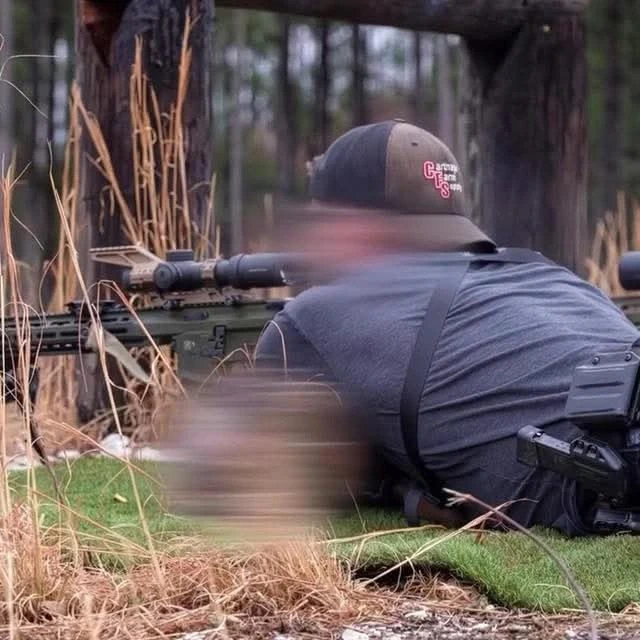
Photo via [@specialopsmag on X](https://x.com/specialopsmag/.
Frequently asked questions
- What does ICAR stand for?
- Intermediate Combat Assault Rifle. Intermediate refers to the 6mm ARC cartridge's position between 5.56 NATO and 7.62 NATO in range and energy.
- Was the SureFire ICAR really used to capture Maduro?
- The January 2026 operation and Delta Force's role in it are documented. The ICAR's presence comes from post-operation images and posts, including from Larry Vickers. It is credible and widely reported, but not officially confirmed.
- Is the ICAR the same thing as SOCOM's HICAR rifle?
- No. HICAR is a separate USSOCOM program for a 5.56 carbine that can fire a future hypervelocity 5.56x45mm round at roughly 82,000 psi on M4A1 lowers. The ICAR is a 6mm ARC rifle on a Six8-pattern lower. What links them is Proof Research's PXT barrel technology, which is reported on the ICAR and cited as an enabling technology for HICAR.
- When is the SureFire ICAR released, and what will it cost?
- Neither has been announced. The ICAR remains in preproduction and was built for a government customer first, though SureFire has confirmed commercial sales are planned. Any release date or price you see quoted is speculation.
- Why does the ICAR use Six8-pattern lowers?
- The LWRCI Six8 magwell is larger than a standard AR-15's, making room for a magazine purpose-built around 6mm ARC's fatter case (the Magpul PMAG 25 ICAR GEN M3) instead of adapted 6.5 Grendel magazines.
- Can a 5.56 SureFire suppressor run 6mm ARC?
- A SureFire employee has said on Reddit that the RC2 and RC3 series will run 6mm ARC despite being designed for 5.56. That is an employee comment rather than published spec, so confirm with SureFire directly. The SOCOM6-MINI4 is the suppressor SureFire actually markets for the caliber.
- Will regular AR-15 parts work with 6mm ARC?
- Mostly. In a standard AR-15, 6mm ARC needs a 6.5 Grendel Type II bolt, an ARC barrel, and ARC or Grendel magazines; the rest of the rifle stays standard. The ICAR's receiver set and magazine are its own pattern.
Sources
- Soldier Systems Daily: SureFire ICAR 6ARC Preproduction Carbine
- Soldier Systems Daily: Magpul Releases PMAG for SureFire ICAR 6 ARC
- Magpul: PMAG 25 ICAR GEN M3 Window
- Air & Space Forces Magazine: US Airpower Paved Way for Special Ops to Capture Venezuela's Maduro
- @specialopsmag on X: ICAR photo
- SureFire: SOCOM6-MINI4
- SureFire: SOCOM556-RC4
- r/NFA: SureFire suppressors and 6ARC (SureFire employee on RC2/RC3 compatibility)
- Outdoor Life: SureFire SOCOM6-MINI4 tested
- American Rifleman: The Proof Research PXT, A New Approach to Barrel Rifling
- Proof Research: PXT Exponential Twist
- Soldier Systems Daily: PROOF Launches PXT Barrel Technology
- Soldier Systems Daily: USSOCOM Seeks Hypervelocity Improved Capability Assault Rifle (HICAR)
- SAM.gov: Hypervelocity Improved Capability Assault Rifle (HICAR) solicitation
- Military Times: SOCOM wants to revive legacy M4 carbine with hypervelocity cartridge
- The Truth About Guns: PSA Adopts ICAR Pattern